

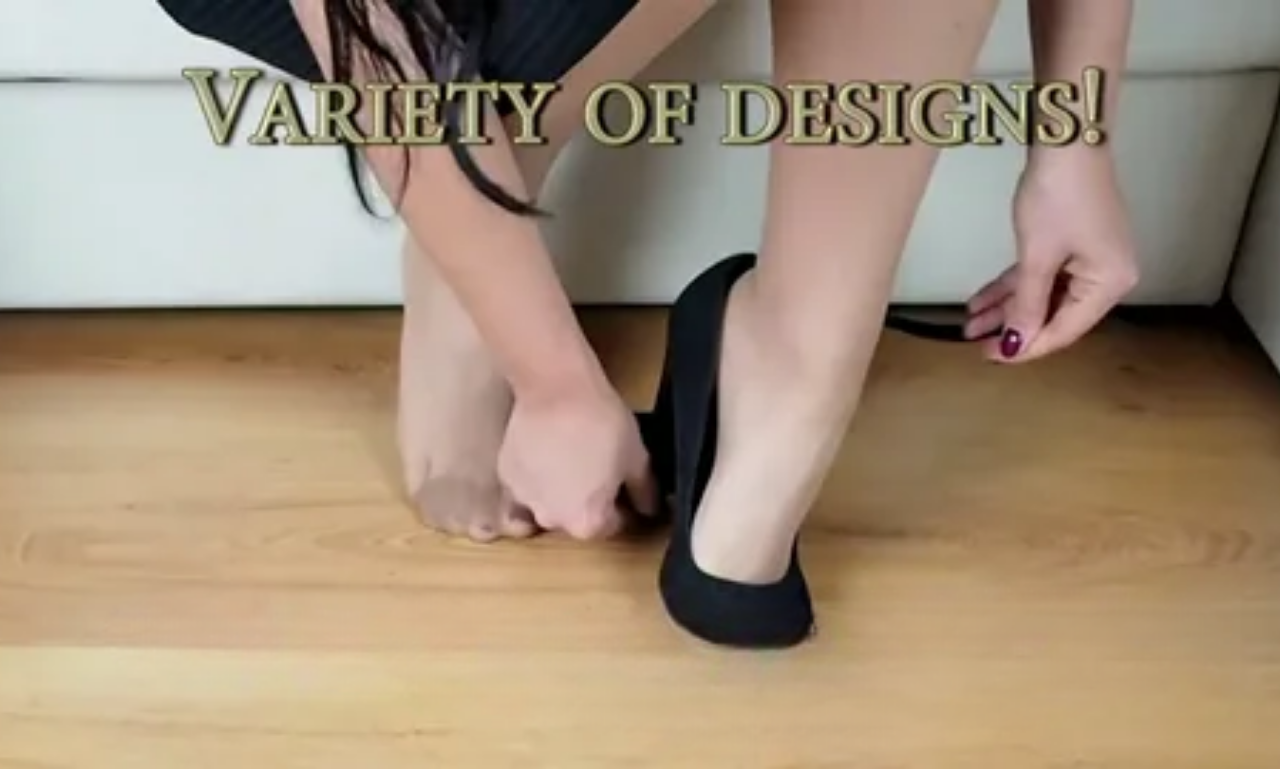
Loafers Slip Off Heel? If your loafers slip off your heel while you walk, the problem usually isn’t that the shoe is automatically “too big.” Your heel may be narrower than the shoe, the instep may not be held securely, the loafer may have too much internal volume, or your foot may be sliding toward the toe box.
A little heel movement can happen with a new pair, especially with stiff leather. But your heel should not repeatedly come out of the shoe, make you grip with your toes, or cause constant rubbing and blisters.
The right solution depends on the cause. A heel grip can help with a small gap at the back, while an insole may work better if the entire shoe feels roomy. If your foot slides forward because there is too much space over the instep, a tongue pad can be more useful.
So before adding an insert, first find out where the extra space is.
Why Do Loafers Slip at the Heel?
Loafers are designed without laces, buckles, or straps. That makes them convenient, but it also means their fit depends heavily on the shoe’s shape and how closely it matches your foot.
The main reasons for heel slipping include:
- The shoe is too long.
- The heel area is wider than your heel.
- There is too much room around your instep.
- The loafer has more volume than your foot needs.
- Your foot slides forward as you walk.
- The lining is particularly smooth.
- The leather is still stiff because the shoes are new.
- Your socks change the fit.
- The loafer’s shape or last does not suit your foot.
The important point is that heel slip does not always mean you need a smaller shoe.
A person can have plenty of room for the toes but still have excessive space around the heel or instep. Likewise, someone can have the correct length but need a different heel shape or shoe last.
The loafers are too long
Length is one of the first things to check.
If the shoe is obviously too long, inserts may only provide a temporary solution. Returning or exchanging it may be the better choice.
Your heel is narrower than the shoe
This happens frequently with slip-on shoes because the rear of the shoe needs to hold the heel without the help of a closure.
If you have a relatively narrow heel, a loafer designed with a broader heel area may move up and down even though the toe box feels comfortable.
Your instep is too low for the loafer
The loafer’s vamp should provide gentle contact over this area. If there is too much room above your foot, the shoe may fail to hold you securely.
Your foot can then slide forward, leaving a gap behind the heel.
This is one reason a tongue pad can sometimes work better than a heel grip. Instead of filling space behind the heel, it helps reduce movement over the instep.
Your foot slides toward the toe box
Not every heel-slip problem begins at the heel.
If your foot is moving forward inside the shoe, the heel naturally moves away from the back of the loafer.
You may notice this when:
- Walking quickly
- Going down stairs
- Walking on smooth surfaces
- Wearing very thin socks
- Wearing shoes with a roomy instep
In this situation, the goal is to control forward movement rather than simply adding padding behind the heel.
The lining is very smooth
A smooth lining can allow more movement between your foot, sock, and shoe.
This may contribute to heel slip, particularly when the fit is already borderline.
However, lining should not be your first diagnosis. If the shoe is substantially too large, changing the amount of friction will not turn it into a correctly fitting shoe.
The leather is new and stiff
New leather loafers can feel different from the same pair after several wears.
The upper may initially feel stiff, and the footbed may not yet feel completely natural under your foot. As the shoe flexes and softens, minor movement can sometimes improve.
Is It Normal for Loafers to Slip at the Heel?
A small amount of heel movement can be normal in new loafers, but your heel should not repeatedly come completely out of the shoe while walking.
This is an important distinction.
When a loafer is new, the heel counter and upper may not yet conform perfectly to your foot. Minor movement may settle as the materials soften.
But excessive heel movement is different.
Watch for these warning signs:
- Your heel lifts significantly with every step.
- The heel comes completely out of the shoe.
- You develop repeated blisters.
- You feel rubbing at the back of your ankle.
- You curl your toes to keep the shoe attached.
- Your foot slides noticeably toward the toe box.
- The shoe feels unstable.
- You change your walking style to keep the loafers on.
If several of these happen, don’t assume that more wear will solve the problem.
A well-fitting loafer should become more comfortable during break-in, not require you to tolerate an obviously poor fit.
Loafers Slip Off Heel: 9 Fixes That Actually Make Sense
There is no universal heel-slip solution. Start with the fix that matches the problem you’re experiencing.
1. Check the Fit Before Adding Anything
Before buying an insert, put the loafers on with the socks you normally wear.
Stand up and walk around.
Check three areas:
Heel: Does it stay reasonably secure?
Instep: Does the upper hold your foot without painful pressure?
Toes: Do they have enough room to move naturally?
The ball of your foot should sit around the widest part of the shoe. Your toes should not be pressed against the front, and the upper should not leave excessive space over your foot.
If the entire loafer feels loose, an adhesive heel grip may not be enough.
The shoe may simply be the wrong size or shape.
2. Use a Heel Grip for a Small Gap
A heel grip is often the simplest solution when the rest of the shoe fits well.
It is a small pad attached to the inside rear of the shoe. By taking up some space behind the heel, it can reduce movement and improve the feeling of security.
A heel grip makes the most sense when:
- The toe box fits properly.
- The width feels comfortable.
- The shoe is only slightly loose.
- Most of the movement occurs at the heel.
- You have a relatively narrow heel.
3. Try a Heel Cup or Heel Cushion
A heel cup can provide more structure around the rear of the foot than a thin heel grip.
Consider this option when:
- Your heel moves up and down.
- The heel counter causes rubbing.
- You want additional cushioning.
- A thin heel grip has not provided enough support.
Be careful with thickness.
If a heel cup raises your heel too much, it can create pressure and potentially make the shoe easier to slip out of.
4. Add a Thin Full Insole
If the whole shoe feels slightly too roomy, a thin full-length insole may be more effective.
It can be useful for people with:
- Lower-volume feet
- Extra room under the foot
- Excess space around both the heel and instep
- A loafer that feels slightly loose everywhere
Choose a thin option first.
An excessively thick insole can raise your foot, reduce toe room, and change how the shoe bends.
5. Use a Tongue Pad for Instep Problems
A tongue pad can be an excellent option when the loafer has too much room over the instep.
It attaches underneath the vamp and reduces the space between the upper and the top of your foot.
This can help stop the foot from sliding forward.
It is particularly worth considering when:
- Your toes fit correctly.
- Your heel slips.
- Your instep feels loose.
6. Experiment With Your Socks
Socks can make a small difference to loafer fit.
Very thin, smooth socks may provide less friction and leave more space inside the shoe. Slightly thicker socks can sometimes improve the fit by adding a little volume.
You could try:
- Thin dress socks
- Medium-weight socks
- Moisture-wicking socks
- Secure no-show socks
- No-show socks with heel grips
Still, don’t use thick socks to compensate for a shoe that is clearly too large.
7. Keep the Shoes and Feet Dry
Sweat and moisture can change how your foot moves inside a shoe.
If your feet become damp during a long day, the fit can feel different from when you first tried the loafers on.
Breathable socks can help manage moisture. Allow the shoes to dry between wears rather than immediately putting damp loafers into a closed storage area.
This will not correct a bad fit, but it can improve comfort and consistency.
8. Give New Leather a Reasonable Break-In Period
If the loafers are new and the heel movement is minor, give the leather some time to soften.
Wear them for short periods at first rather than immediately using them for a full day of walking.
Pay attention to what happens.
If the heel becomes more secure as the leather conforms to your foot, break-in was probably part of the issue.
If the heel continues to come out significantly, the shoe may not be the right shape or size for you.
Never assume that painful rubbing is something you simply have to endure because the shoes are new.
9. Exchange the Shoes or Consult a Cobbler
Sometimes the best solution is to stop trying to force the shoe to work.
If the loafers are clearly too large, exchanging them is usually more sensible than stacking multiple inserts inside them.
If they are expensive and otherwise fit well, a qualified cobbler may be able to make certain adjustments depending on the construction.
Professional alteration makes the most sense when the basic fit is already close.
Should You Size Down If Loafers Slip?
Only if the overall fit indicates that the shoe is too large.
Heel slip by itself is not enough evidence that you need a smaller size.
For example, imagine this situation:
Your toes have comfortable space, the width feels right, but your heel has a small gap.
A heel grip or tongue pad may solve the problem without changing the shoe’s length.
Now consider another situation:
Your toes have lots of extra room, the instep is loose, and your heel slides significantly.
A smaller size may be worth trying.
The important thing is to separate length from volume.
A smaller size reduces length, but your problem may actually be excess space around the heel or instep.
Quick sizing guide
| What you notice | What to try |
| Small heel gap, otherwise good fit | Heel grip |
| Heel rubbing | Heel cup or cushion |
| Entire shoe feels roomy | Thin full insole |
| Foot slides forward | Tongue pad |
| Toes already fit well | Don’t automatically size down |
| Toes have excessive room | Try a smaller size |
| Heel is much wider than your foot | Consider another loafer shape |
| Severe slipping from the first wear | Consider exchanging |
How Should Loafers Fit?
A good loafer should feel secure without feeling painfully tight.
Heel
The heel should remain reasonably close to the rear of the shoe during normal walking.
Some movement can happen with new footwear, but repeated heel exit is a warning sign.
Instep
The vamp should make comfortable contact with the top of your foot.
It should not feel like the shoe is floating above your foot.
At the same time, it should not create painful pressure.
Toes
Your toes should have enough space to move naturally.
Never accept a painfully cramped toe box simply because it eliminates heel slip.
Width
Your foot should sit naturally within the widest part of the shoe.
If a shoe is too narrow but the heel already feels loose, buying a longer size to obtain more width may create even more heel movement.
A different width or shoe shape may be the better answer.
Walking
Always test the shoes while walking.
A loafer that feels secure while sitting can behave very differently once your foot starts moving.
Which Fix Should You Try First?
The easiest way to choose is to identify where the problem starts.
| Problem | First option |
| Small gap behind the heel | Heel grip |
| Heel movement plus rubbing | Heel cup |
| Shoe feels roomy everywhere | Thin insole |
| Foot slides forward | Tongue pad |
| Instep feels loose | Tongue pad |
| Minor looseness with thin socks | Slightly thicker socks |
| New leather has minor movement | Reasonable break-in |
| Shoe is clearly too large | Exchange or size down |
| Toes are already crowded | Keep the size; don’t size down |
| Every loafer slips | Try a different last or heel shape |
This diagnostic approach is better than randomly adding several products at once.
Why Do My Loafers Slip Even Though They Fit My Toes?
Because toe room is only one part of shoe fit.
A loafer has to work in three dimensions:
Length is the distance from heel to toe.
Width is the space from one side of the shoe to the other.
Volume describes how much room exists around and above your foot.
Your toes can fit perfectly while your heel and instep still have too much space.
That’s why two people can wear the same size and have completely different experiences with the same loafer.
If your toes feel good but the heel keeps slipping, look at the heel shape and instep before automatically changing size.
Can Socks Stop Loafers From Slipping?
They can sometimes reduce minor movement.
A sock can add a little friction and take up a small amount of internal space. This may be enough when your loafers are only slightly loose.
However, socks won’t reliably correct a major fit problem.
If your heel comes completely out of the shoe, don’t expect thicker socks to solve everything.
Use socks as a small adjustment rather than as a substitute for proper sizing.
Do Leather Loafers Stretch?
Leather can soften and conform with wear, but you should not expect an oversized loafer to become shorter.
This is an important distinction.
If the shoes are slightly stiff but otherwise fit correctly, wearing them gradually can improve comfort.
If the shoes are already too long and your heel is slipping badly, break-in is unlikely to solve the fundamental problem.
Leather can change with wear, but that does not mean every fit problem will disappear.
When Should You Return the Loafers?
There is a point where trying another insert isn’t worthwhile.
Consider returning or replacing the loafers if:
- Your heel repeatedly comes out.
- You develop blisters every time you wear them.
- You have to grip with your toes.
- Your foot slides dramatically toward the front.
- The shoes feel unstable.
- Your toes become uncomfortable when you try a smaller size.
- You need multiple thick inserts just to keep the shoe on.
- The shoe shape simply doesn’t match your foot.
A good-fitting loafer should not require a complicated combination of pads, socks, and cushions just to stay attached to your foot.
How to Prevent Heel Slip When Buying Loafers
The easiest heel-slip problem to solve is the one you never create.
Measure your feet
Don’t rely entirely on the size printed inside another pair of shoes.
Different brands and shoe lasts can fit differently.
Try both loafers
Your feet are not necessarily identical.
One foot may be slightly longer, wider, or higher-volume than the other.
Make sure both shoes feel acceptable.
Wear your normal socks
A pair that fits with thick socks may feel loose with thin dress socks.
Walk around
Take several normal steps.
Test stairs if possible
Stairs can reveal excessive heel movement that isn’t obvious on a flat floor.
Check the instep
If there is a large gap over the instep, your foot may move forward.
Check your toes
Make sure they have natural room.
Don’t sacrifice toe comfort simply to create a tighter heel.
Consider the shoe last
If you repeatedly experience heel slip in a particular style, try a different shape rather than changing size repeatedly.
Don’t size up just for width
If your foot needs more width but the heel already fits loosely, a longer shoe may make the heel problem worse.
Look for a different width or construction instead. (Loafers Slip Off Heel)
A Simple Heel-Slip Test You Can Do at Home
You don’t need special equipment to evaluate a pair of loafers.
Step 1: Put them on normally
Wear the socks you usually plan to wear.
Step 2: Stand up
Let your feet settle naturally.
Step 3: Walk slowly
Pay attention to heel movement.
Step 4: Walk at your normal pace
Don’t deliberately change your stride.
Step 5: Turn naturally
Turning can reveal whether the shoe follows your foot.
Step 6: Walk up and down stairs
Notice whether your heel lifts significantly.
Step 7: Check your toes
If you’re curling to keep the loafers attached, that’s a sign the shoe isn’t holding your foot securely.
Then identify the problem:
Only the heel is loose? Try a heel grip.
The whole shoe feels roomy? Consider a thin insole.
Your foot slides forward? Look at the instep and consider a tongue pad.
Are your toes already crowded? Don’t size down.
The shoe feels fundamentally wrong? Return or exchange it.
Heel Slip vs. a Properly Fitting Loafer
A secure loafer should follow your foot as you walk.
Signs of a good fit
- The heel remains reasonably secure.
- The upper holds the instep comfortably.
- Your toes can move naturally.
- Your foot does not slide dramatically forward.
- You don’t need to grip the floor with your toes.
- The shoe feels stable.
- The loafer becomes more comfortable as you wear it.(Loafers Slip Off Heel)
Signs of a poor fit
- The heel pops out repeatedly.
- The shoe lags behind your foot.
- Your toes curl to keep it on.
- The back of the shoe constantly rubs.
- You develop repeated blisters.
- You need excessive padding.
- Your walking pattern changes.
- (Loafers Slip Off Heel)
The objective isn’t to make a loafer feel completely immovable. Slip-on shoes need some natural movement.
The goal is controlled movement without the shoe losing contact with your foot.(Loafers Slip Off Heel)
Frequently Asked Questions
Why do my loafers slip off my heel?
The most common causes are excess length or volume, a heel cup that is too wide, a low instep, forward foot movement, or a loafer shape that doesn’t match your foot. New leather and slippery linings can contribute as well. (Loafers Slip Off Heel)
Is it normal for loafers to slip at the heel?
Minor movement can occur with new loafers, particularly before the materials have softened. However, your heel should not repeatedly come completely out of the shoe during normal walking. (Loafers Slip Off Heel)
How much heel slip is normal in loafers?
The practical test is whether the shoe remains secure and comfortable while walking. Significant repeated heel lift or heel exit indicates a fit problem. (Loafers Slip Off Heel)
How do I stop loafers from slipping?
First, identify where the excess space is. Use a heel grip for a small gap behind the heel, a heel cup for rear support, an insole when the whole shoe is roomy, or a tongue pad when your foot is because the instep is not held securely. (Loafers Slip Off Heel)
Should I size down if my loafers slip?
Not automatically. Size down when the overall shoe is too large, and when there is excessive room at the toes as well. If your toes already fit correctly, a heel or instep adjustment may be more appropriate. (Loafers Slip Off Heel)
Do heel grips work for loafers?
Yes, they can help when there is a small amount of extra space behind the heel. They are not a good substitute for the correct size when the entire shoe is substantially oversized. (Loafers Slip Off Heel)
Will an insole stop heel slip?
A thin insole can help when the shoe has too much internal volume. If the only problem is a small gap at the heel, a heel grip may be a more targeted solution. (Loafers Slip Off Heel)
Can socks prevent loafers from slipping?
Socks can reduce minor movement by adding friction and taking up a small amount of space. They cannot reliably correct a loafer that is significantly too large. (Loafers Slip Off Heel)
Why do my loafers slip even though my toes fit?
Because shoe fit involves more than length. You may have the correct toe room but excess space around your heel or instep. A different heel shape, tongue pad, or heel grip may solve the problem without changing size. (Loafers Slip Off Heel)
Do leather loafers stop slipping after breaking in?
Minor movement may improve as leather softens and conforms to your foot. Severe heel slip usually shouldn’t be blamed on break-in, especially if the heel repeatedly comes out during normal walking. (Loafers Slip Off Heel)
Why do loafers cause heel blisters?
Repeated movement between your heel and the shoe creates friction. Improving the fit and reducing unnecessary heel movement can help prevent that rubbing. (Loafers Slip Off Heel)
Can a cobbler fix loose loafers?
Sometimes. The available modification depends on the shoe’s construction and the cause of the looseness. When a quality pair otherwise fits well but needs a small adjustment. (Loafers Slip Off Heel)
You must read: Good Morning Wednesday Prayers
